Defined the venture strategy and shaped the product and offline service proposition
Case Study
Selected Work
ETS Navigator
(now rebranded as Navaris)
Led the development of a maritime EU ETS platform, translating complex regulation and carbon finance into an operational product for ship owners.
Role
Product Manager | Service Designer | Product Designer
Sector
B2B | Maritime shipping | Regulatory compliance
Scope
Defined product & service strategy | Led backlog & delivery | Bridged domain complexity (shipping + ETS + carbon markets)
Stakeholders


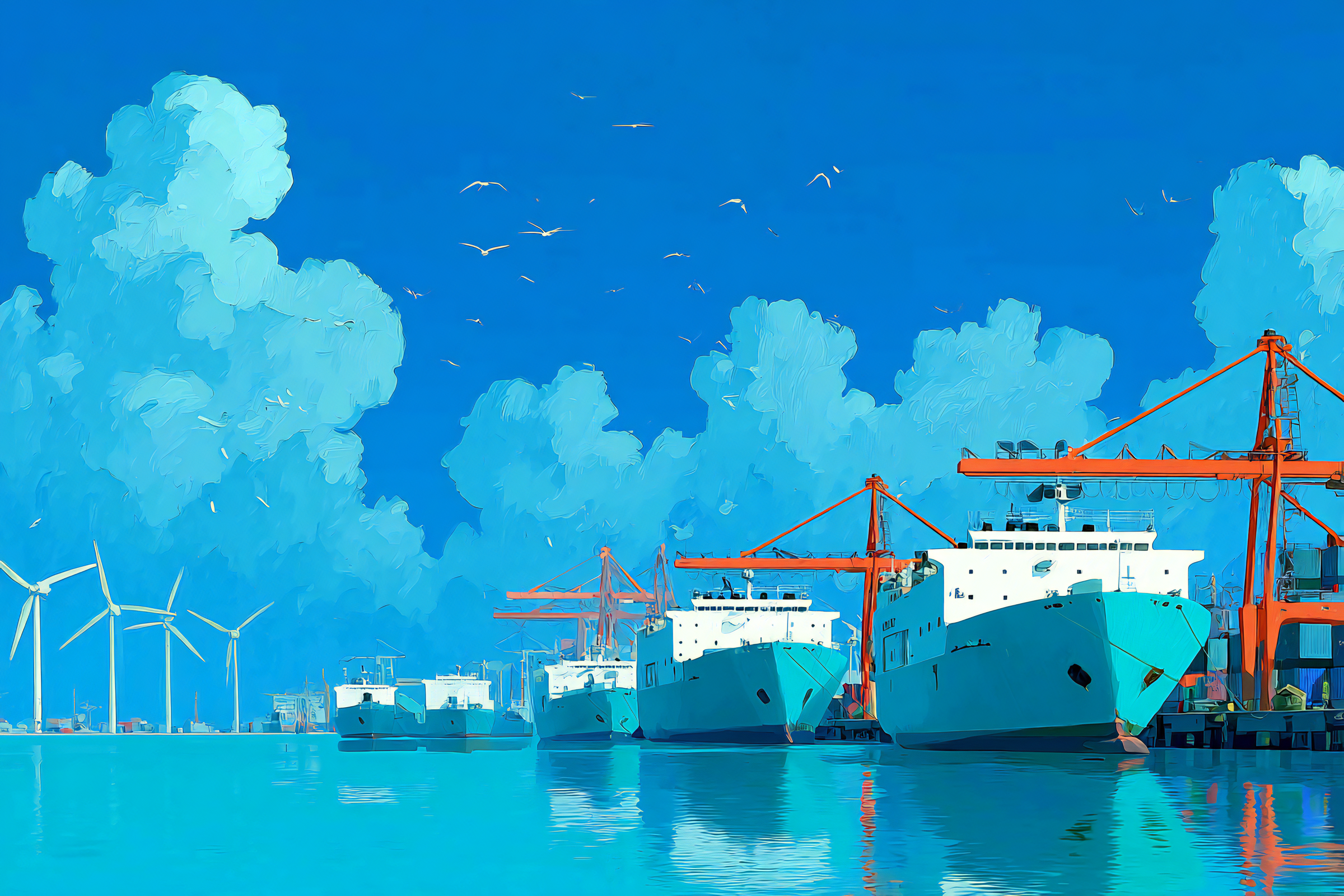
Visualisation of sustainable shipping practices at the Port of Rotterdam
Context
The introduction of EU ETS created a new financial and operational burden for ship owners and operators, who lacked integrated tools to track emissions, manage compliance, and navigate carbon markets.
International shipping companies were heavily impacted by the complexities of the new regulations, including setting up maritime holding accounts, monitoring emissions, and procuring EUAs. To address this, we developed an all-in-one platform to support seamless compliance.
Impact
Simplified emissions compliance for non-technical maritime operators
Structured fragmented regulatory workflows into a unified system
Enabled companies to create holding accounts, monitor emissions and manage financial exposure
Process
Understand
Stakeholder mapping
In-depth interviews
Review of official documents
Competitor analysis
Ideation
Journey mapping
Service blueprinting
Design
Wireframing
UX–UI handoff
Service delivery documentation
Validation
Demo to companies
UI iteration
Feedback loop
Delivery
MVP scoping
Product backlog
Designer-developer handoff
QA
1. Understand
I began by mapping and understanding the project's complex landscape, focusing on three core domains: (1) maritime shipping operations, (2) EU ETS regulations, and (3) carbon finance.
This was achieved through interviews and brainstorming sessions with stakeholders from these domains, combined with a thorough review of relevant documents and existing platforms.
By doing so, I was able to identify key constraints, uncover valuable opportunities, and clearly define the specific requirements for the service delivery we could offer.
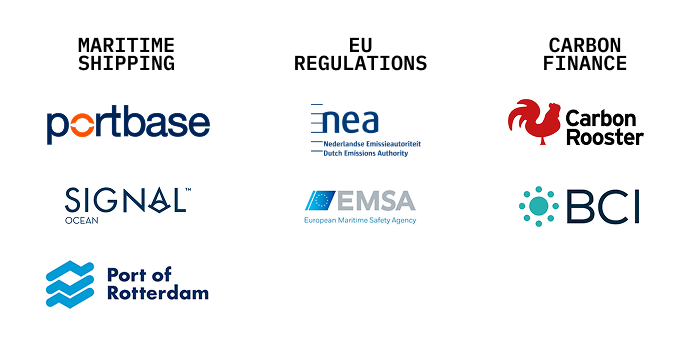
Conducted interviews and/or reviewed official documents from these institutions
2. Ideation
This is the service design phase of the project. After building a solid understanding of the three core domains, I mapped the journeys of key stakeholders to reflect their operational realities.
I then developed a service blueprint to visualize the interactions between our system and the broader ecosystem, clarifying how and where we would intervene.
This process helped define the venture strategy and sharpen the value proposition we offer.
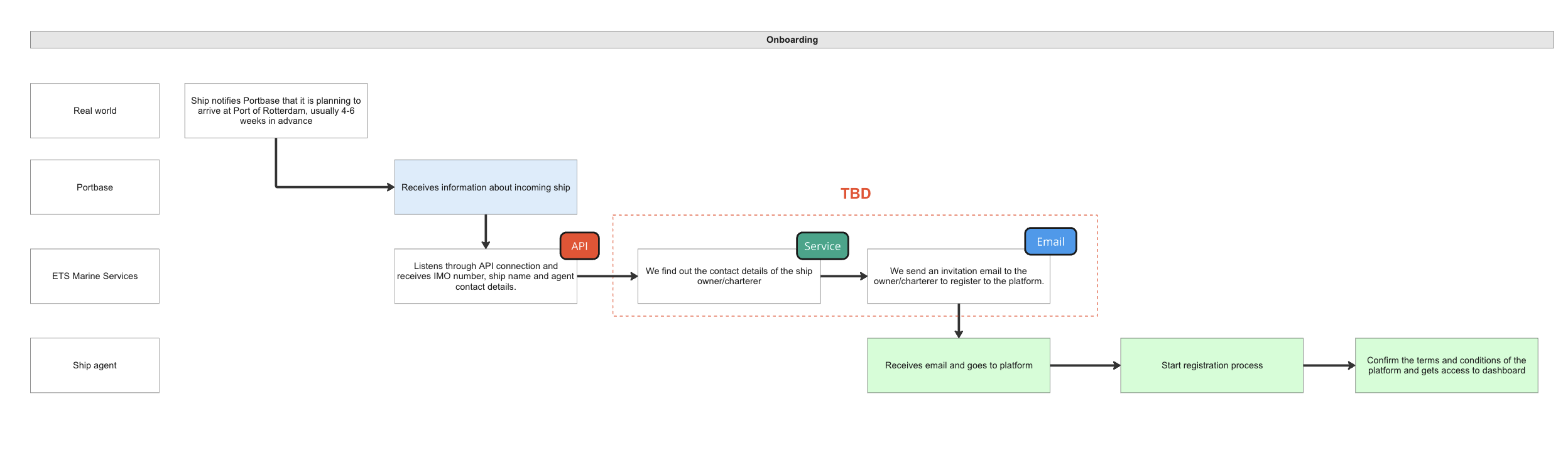
Blurred due to NDA
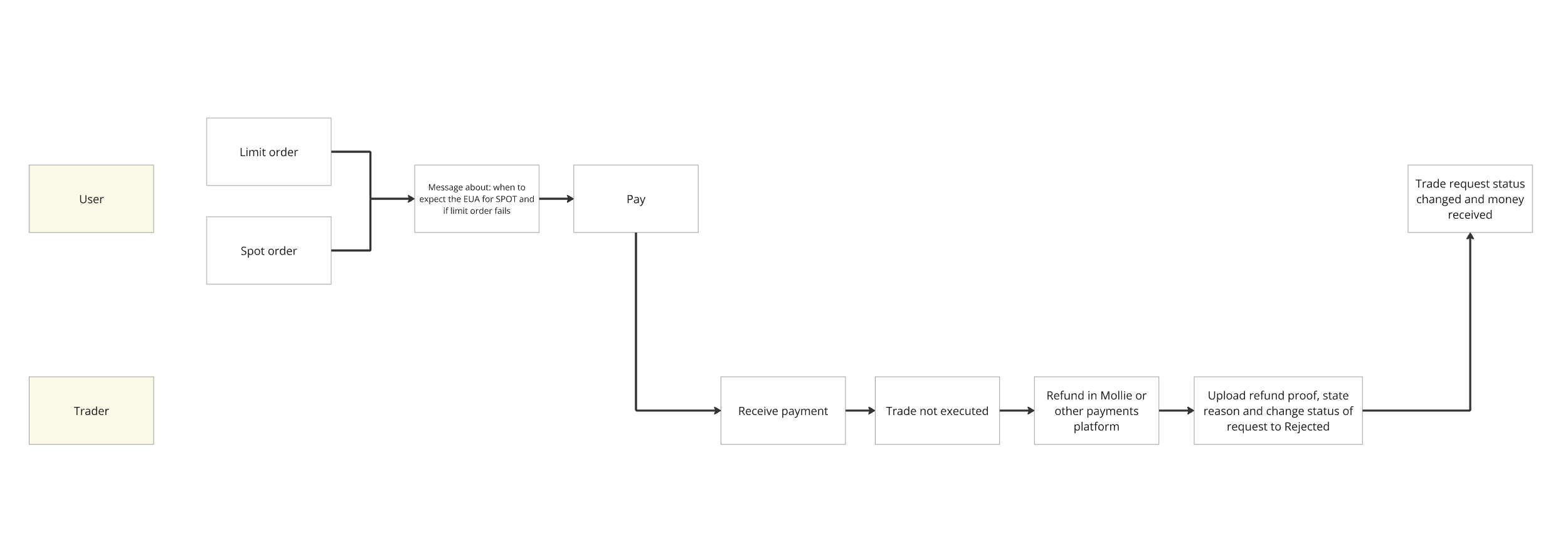
Blurred due to NDA
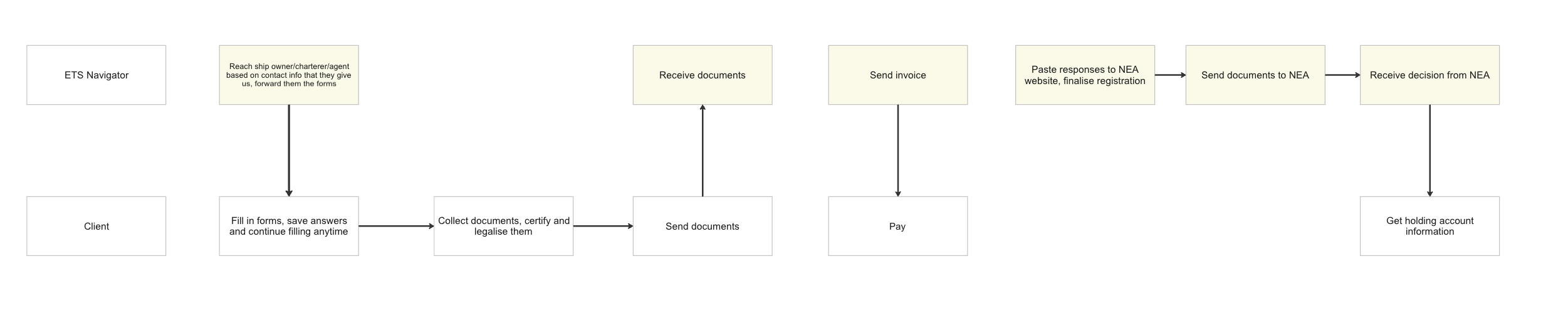
Blurred due to NDA
3. Design
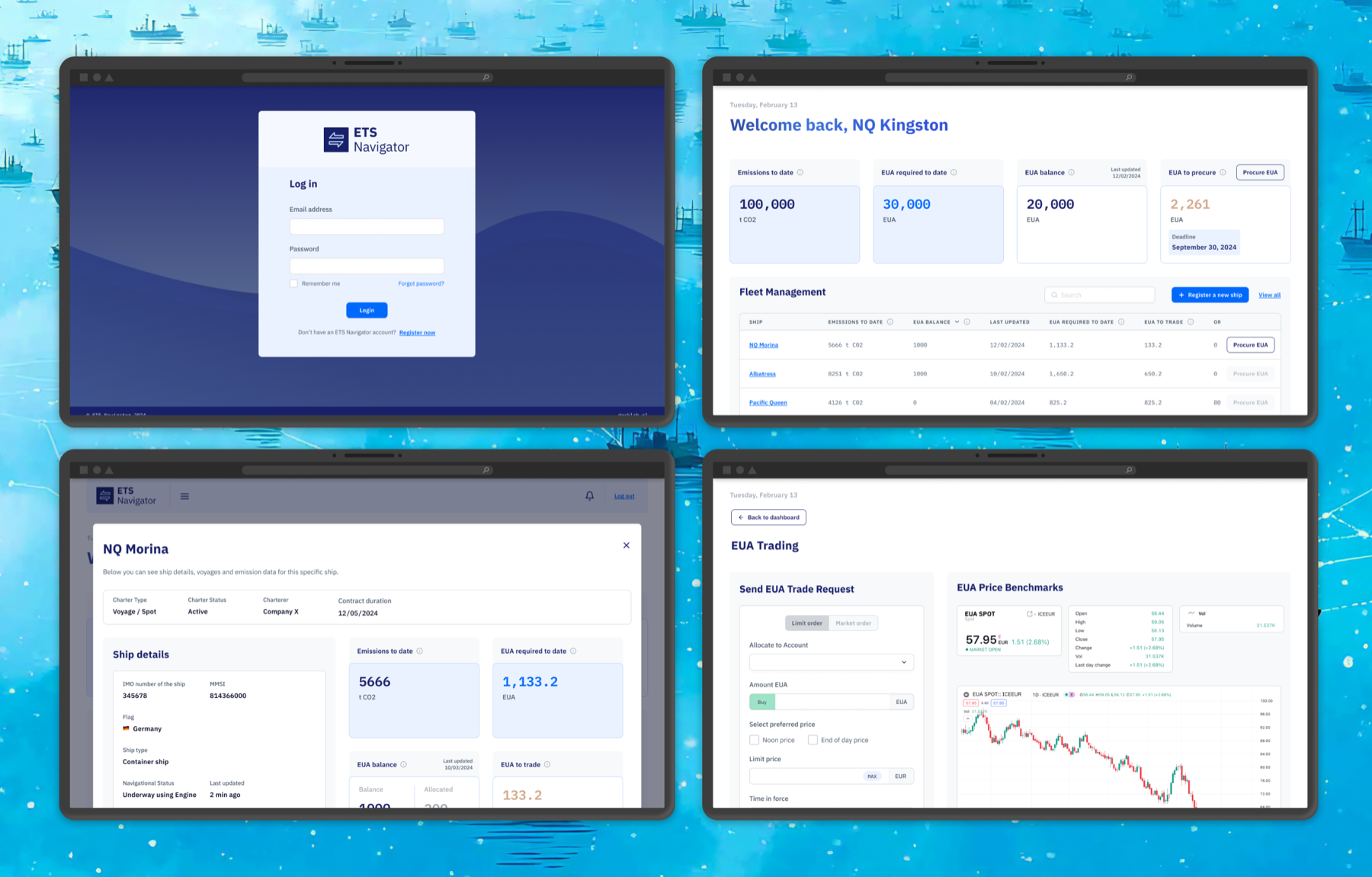
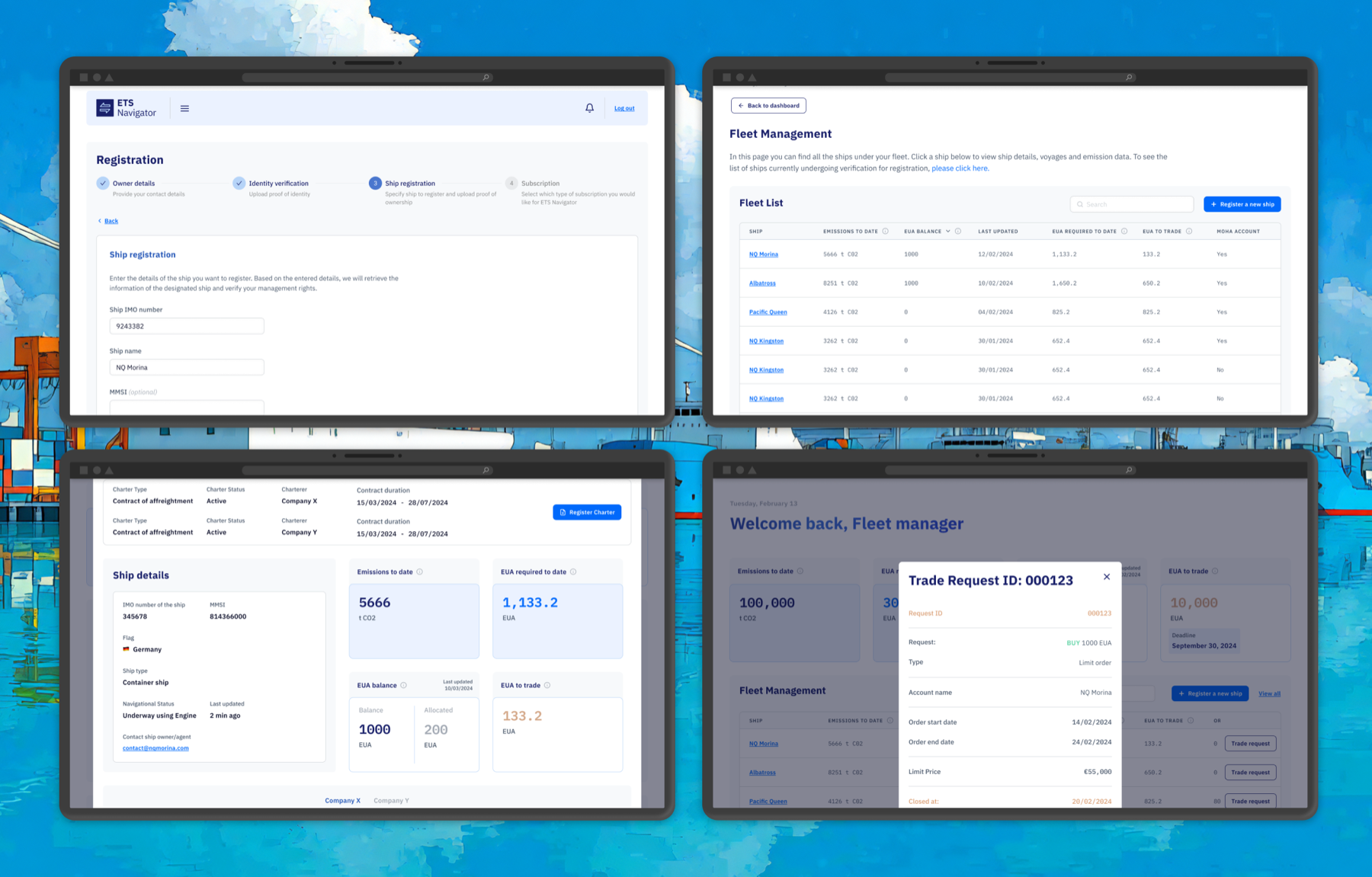
Once the venture strategy took shape, I defined the product in more detail. We focused on three core services: maritime holding account creation, emissions monitoring, and EUA (EU Allowance) trading. I translated these into wireframes for each service and designed the end-to-end platform experience.
Following the wireframes, I handed over the designs and oversaw the UI development. In parallel, I developed service delivery documentation outlining how offline operations should be executed, along with supporting materials for customers.
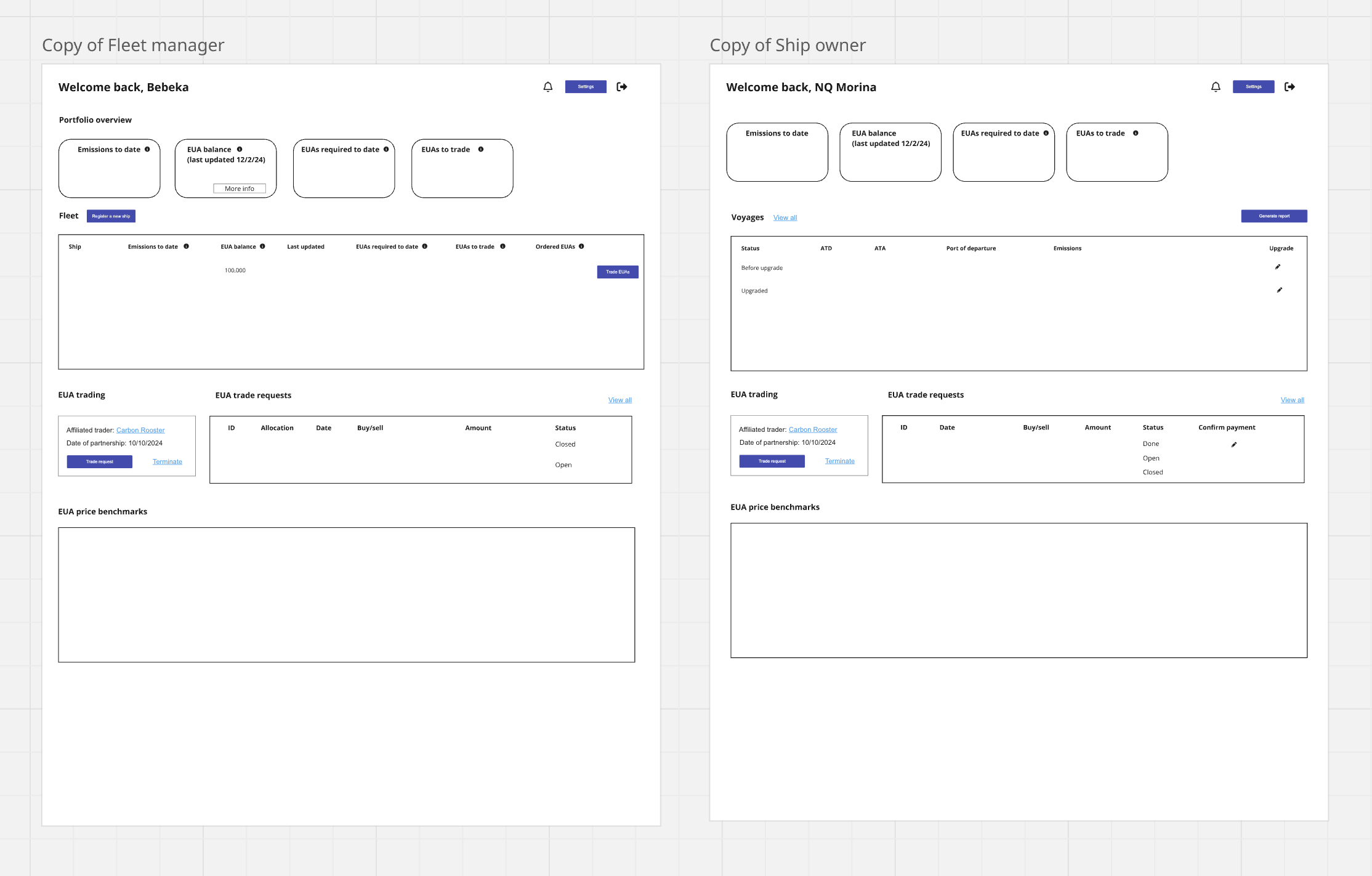
Blurred due to NDA
Initial wireframe design for the dashboard
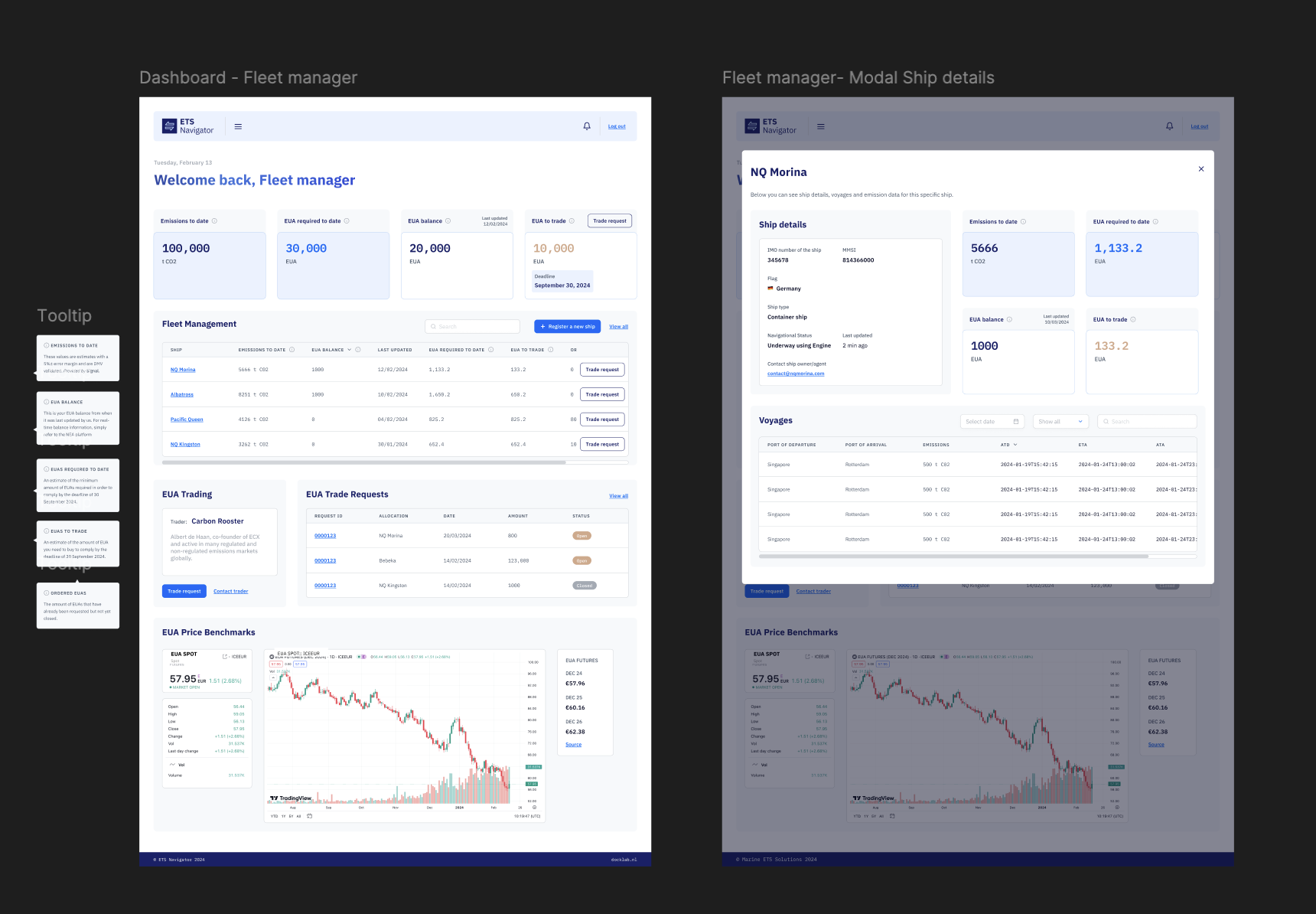
Blurred due to NDA
Initial high-fidelity UI design for the dashboard
4. Validation
In the validation phase, we conducted demo presentations with several international shipping companies. These sessions revealed:
- A strong need for clear overviews of financial risk exposure and potential gains related to EU ETS
- Complex ownership and chartering structures that directly impact ETS obligations
- Specific use cases focused solely on EUA procurement, without the need for emissions monitoring
This phase generated key learnings and rapid iterations, leading to new features around chartering, dedicated EUA procurement dashboards, and comprehensive financial overviews.
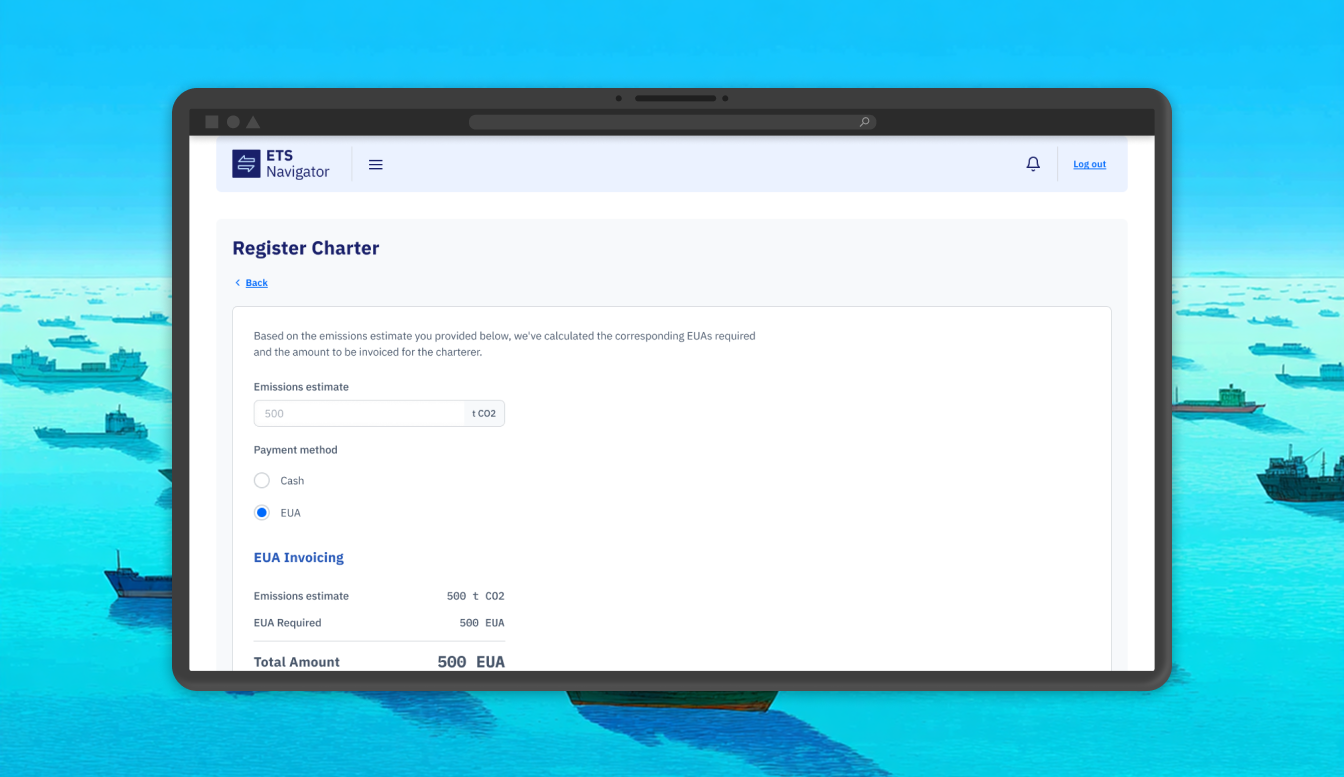
Chartering ships is a feature that emerged from discussions with clients.
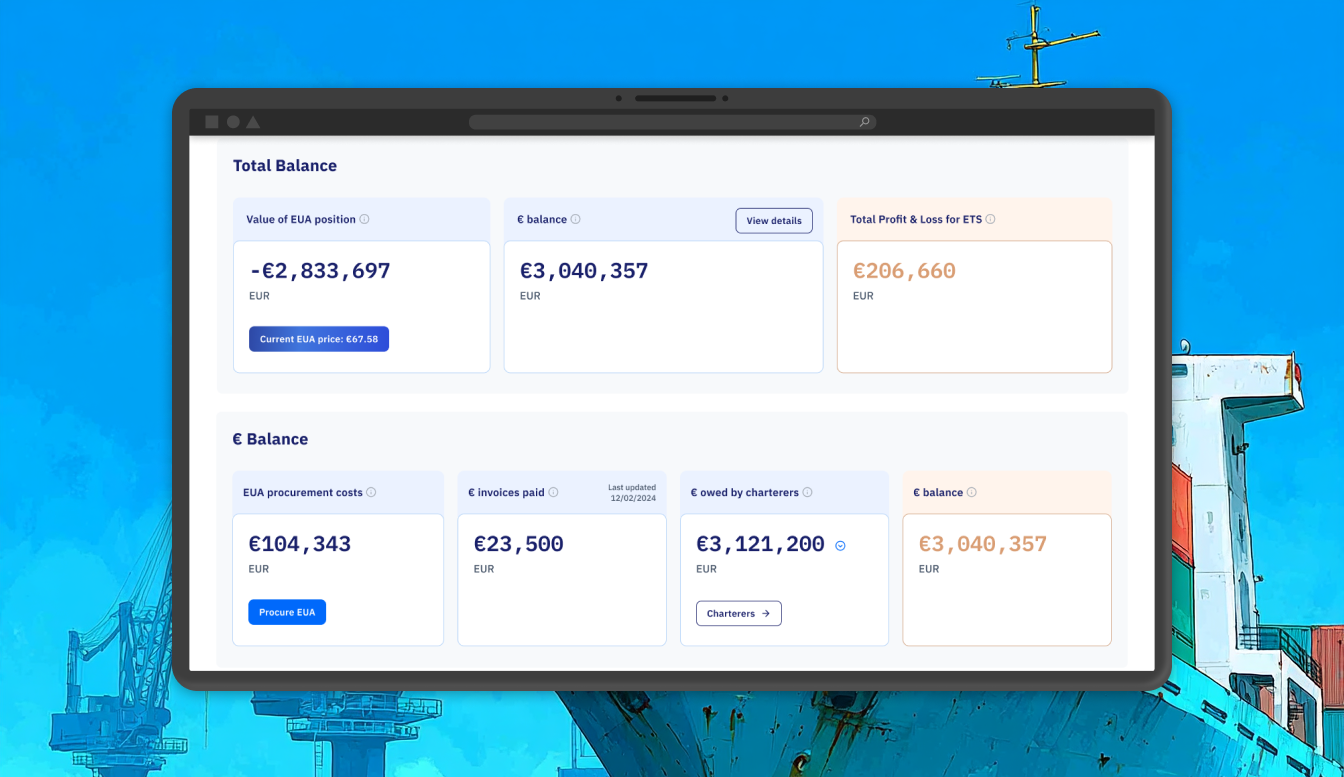
A sample screen of the financial overview, introduced in response to needs identified during the development of the chartering feature.
5. Delivery
In practice, delivery was continuous throughout the lifecycle, with me as Product Manager. I co-defined the MVP scope, managed the product backlog, facilitated design–development handovers, and led QA workshops to ensure the platform functioned as intended.
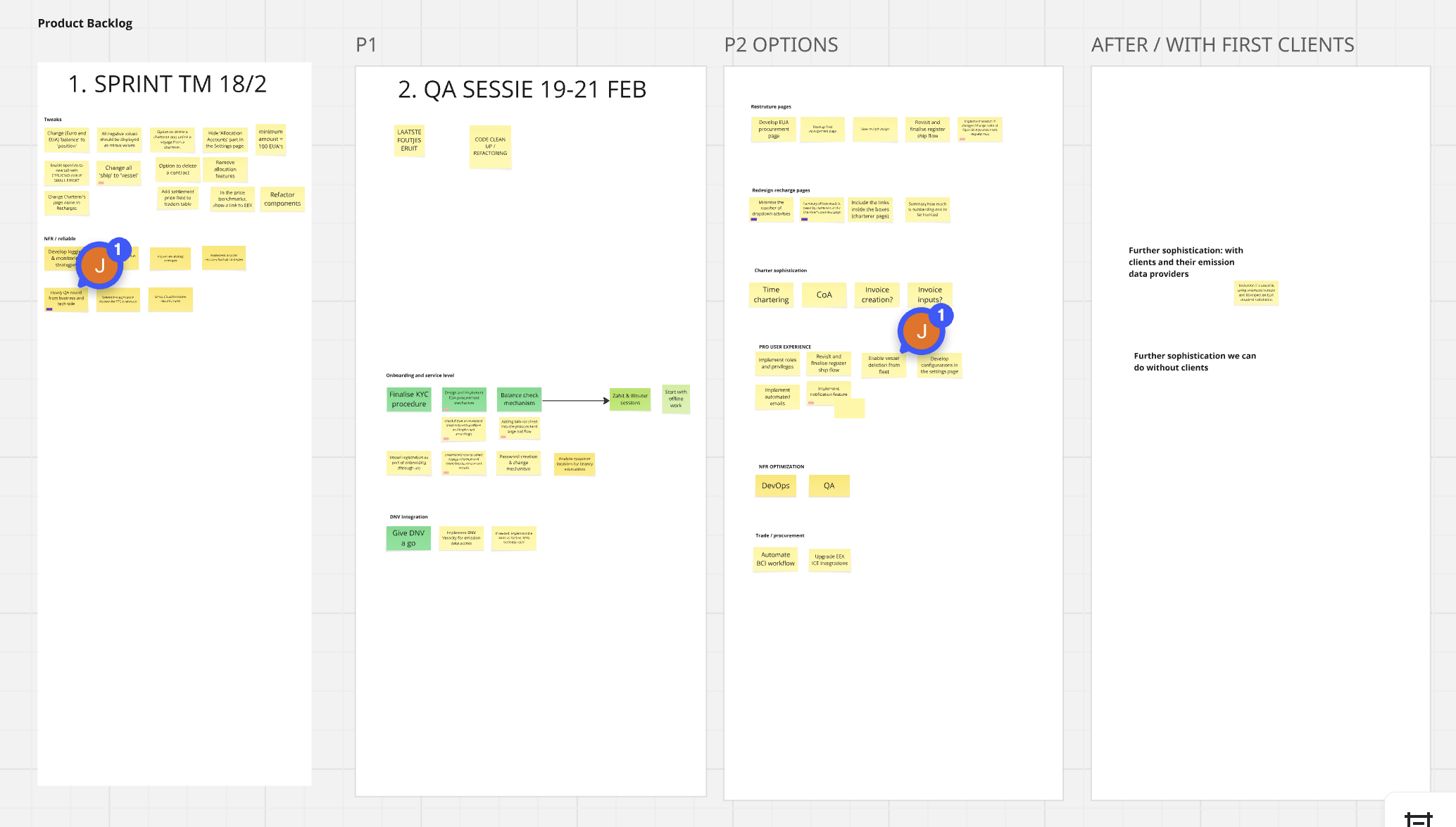
Blurred due to NDA
Led workshops to define QA processes.
Solution
A product–service system comprising a full-scale enterprise platform, integrating real-time emissions data via API, enabling EUA procurement, and providing operational support for managing maritime holding accounts.
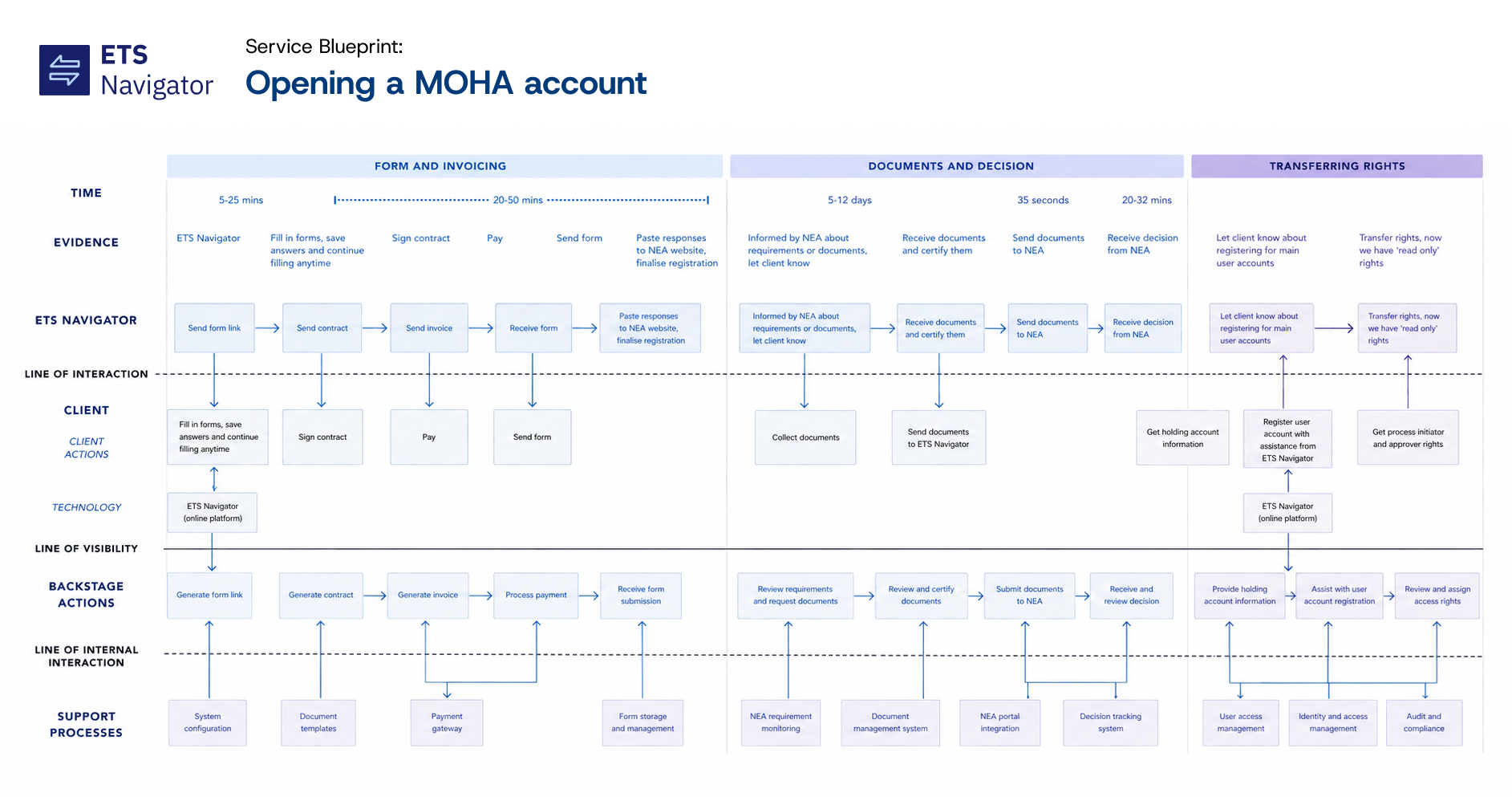
Blurred due to NDA
Service blueprint outlining the offline & online processes for registering a Maritime Operator Holding Account (MOHA) for international ship owners.