Standardized onboarding across facilities in 3 continents
Case Study
Selected Work
ReSource for Tesla
Transformed a fragmented global onboarding process into a scalable implementation program for a blockchain traceability platform.
Role
Service Designer
Sector
B2B | Supply chains | Change management
Scope
Implementation strategy | Service blueprinting | Program structuring | Change enablement
Stakeholders


Visualisation of a cobalt mine in DR Congo
Context
Tesla aimed to pilot an enterprise blockchain solution (ReSource) for cobalt traceability across facilities in Africa, Europe, and Asia, but encountered efficiency bottlenecks.
Implementing such a complex system across global facilities proved challenging due to ad hoc workflows, a lack of standardized implementation structure, and insufficient human-centered documentation. I led the structuring and redesign of the global implementation program as a Service Designer, working across product, operations, and client teams.
Impact
Reduced reliance on manual coordination
Improved clarity and usability of implementation processes
Defined a scalable, self-service onboarding direction
Process
Understand
- Internal stakeholder interviews
- System analysis
- Documentation audit
- Observational research
- Workshop facilitation
- Process mapping
Design & Iteration
- Service blueprinting
- Onboarding documentation
- Workshop design
Review
- Workshop refinement & documentation improvements
- Blind spot identification
- Opportunity mapping
Scale
- Self-service tooling
1. Understand
The goal was to understand how the ReSource system operated in practice and how its implementation program was executed across global facilities.
Through internal interviews, documentation review, and observation of live client implementations, I mapped the end-to-end onboarding process and all required touchpoints.
This revealed a fragmented implementation landscape:
- Workflows varied across regions and facilities
- No standardized onboarding structure
- Heavy reliance on manual coordination
- Documentation that was difficult for clients to understand
As a result, onboarding was slow, difficult to scale, and at times chaotic. These insights were consolidated into a process map, exposing key bottlenecks and forming the foundation for restructuring the program.
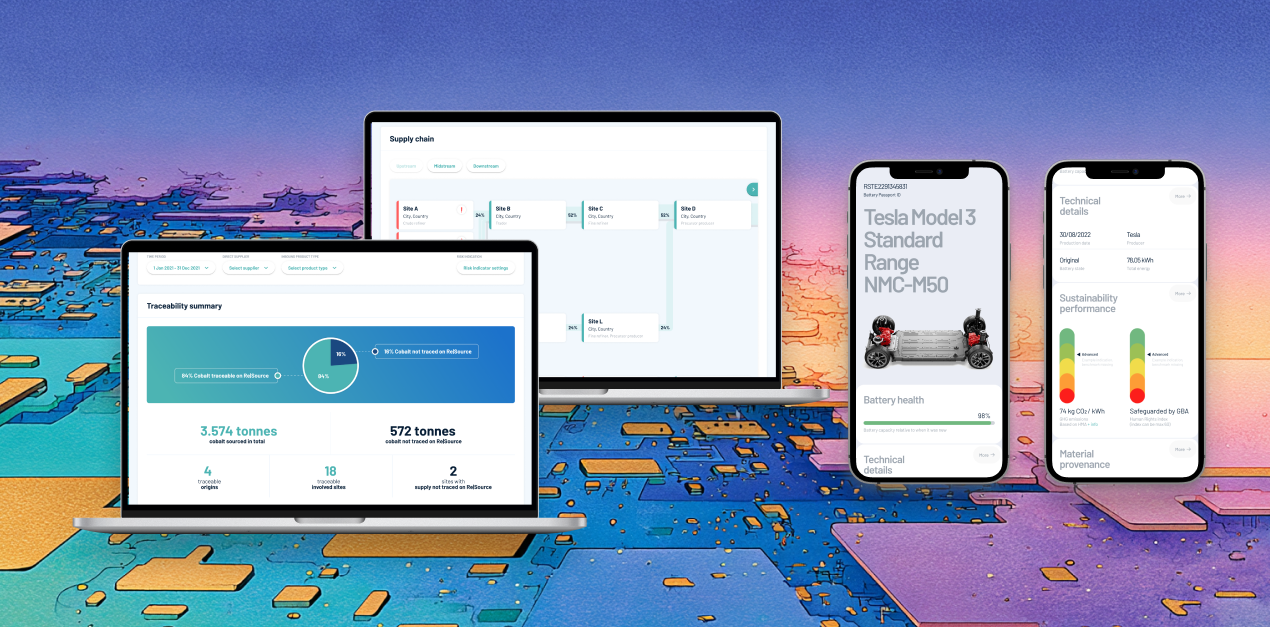
The ReSource system combined a desktop application for office use with a mobile tool for field operations.
2. Design & Iteration
The process map served as the foundation for developing a comprehensive service blueprint that structured the end-to-end implementation program across teams and facilities.
This blueprint aligned internal and external stakeholders on roles, responsibilities, and workflows, creating a shared understanding of how implementation should be executed.
By introducing a clear, standardized structure:
- Ambiguity in onboarding was reduced
- Collaboration between technical and implementation teams improved
- The program became more repeatable across different facilities
The blueprint also surfaced key gaps and inefficiencies, which were iteratively refined through workshops and real-world application, ensuring it remained grounded in operational realities.
Click image to zoom
3. Review
The service blueprint became the go-to guide for running the implementation program, but it was far from static. As it was applied in practice, it was continuously refined through ongoing learnings and insights gathered from client interactions. These iterations led to several key improvements:
- Established a more efficient approach to assess product-site fit
- Streamlined collaboration between the tech and implementation teams for configuration
- Introduced standardized training sessions to onboard clients to the platform
- Defined a consistent process for managing IT and hardware requirements
- And more refinements driven by real-world implementation experience

4. Scale
Refining the service blueprint led to a clear insight: the implementation program would not scale due to its reliance on manual, human-led processes. There was a clear need for automation. By identifying key areas within the blueprint that could be streamlined, I designed a self-service onboarding platform. Once implemented, it was expected to double output while reducing the time required by half. The platform was scheduled for development following the end of my engagement.

Other Projects

Kawan
Founder | Product Management | Product Design
B2CSocial marketplaceEntrepreneurship
ETS Navigator
Product Management | Service Design | Product Design
B2BMaritime shippingRegulatory compliance

Flood Risk Mitigation in Eastern Uganda
Service Design | Systems Thinking
Community engagementClimateResearch